
Special Series
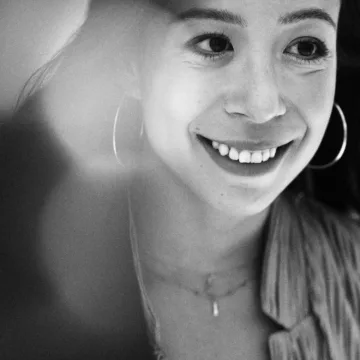
Interview with Katherine A. Sherbrooke

PSB: Boston Edition and GrubStreet are excited to be featuring Katherine A. Sherbrooke! Join us for a celebration of her book This Much is True on Thursday, September, 17th at Porter Square Books: Boston Edition. Susan Bernhard will join Sherbrooke in conversation.
We had a chance to ask Katherine a few questions about her new book:
GrubStreet: Can you share your book pitch and what inspired you to bring it to life?
Katherine A. Sherbrooke: In This Much is True a woman is forced to reckon with a trauma from her high school days when she is shocked to realize that the man at its center is set to become her daughter’s future father-in-law. Over the course of a weekend designed for the parents to “get to know each other” she must decide if she buries the truth forever or finally speaks up and destroys her daughter’s future in the process.
This premise hit me out of the blue over a decade ago. It’s chock-a-block full of the themes I tend to explore in my novels, namely how difficult our culture can be on women and how a particular character finds the strength to swim upstream to find fulfillment and stay true to herself. This book directly deals with the fall-out of sexual assault decades later, something so many women invisibly carry. And as a child of the ‘80s, I wanted to look back on a time which so many of us remember nostalgically (including me!) and put a new lens on the kind of behavior that was barely questioned back then but set up unhealthy power dynamics. In the end, I was inspired to write this story because I badly wanted to find a path of redemption for my protagonist that would be unexpected and highly satisfying. I’m happy to say that I think I did!
GS: GrubStreet is all about supporting writers through all stages of their writing journey. How has GrubStreet supported or shaped the writing journey with your books?
KS: In so many ways! First with craft. I began my very first novel in a 10-week “Novel in Progress” class almost 15 years ago. My classmates and I loved the class and our instructor so much that we took the class over and over as a group and continued to write our novels together. The equally impactful part of GrubStreet for me has been the community. It started right there in that classroom (I’ve been in a writing group ever since with two of those classmates) and I’ve become friends with so many incredible fellow writers in the larger GrubStreet ecosystem. It’s a pay it forward, pay it back system of creative camaraderie. There’s always someone one, two, or five steps ahead willing to lend a hand.
GS: Looking back, were there any standout moments — a challenge and breakthrough, or a surprise — from the process of writing this book?
KS: Yes! As mentioned above, the premise for this novel hit me light a bolt of lightning, but I was completely stumped when it came to finding the solution for the mess I’d gotten my protagonist into. I tend to write books that start with character more than plot, and so it was key for me to figure out who this woman was and what drove her specific experience: in other words, I had to find my way into the story in order to chart my way out. But try as I might, I couldn’t seem to find that entry point. Until…I hit on the idea of putting the book in conversation with a well-known movie from the ‘80s, one that I loved back then and find deplorable now. I imagined who those characters really were (beyond the comedic clichés presented in the movie) and what became of them 40 years later. You don’t have to know anything about the movie to make sense of the novel, but it gave me the breakthrough I needed. (psst—I won’t give it away here, but anyone who came of age in the ‘80s will likely figure out what movie it is!)
GS: One of the great benefits of a writing community like GrubStreet is the opportunity for learning and feedback from so many different perspectives. Was there a specific piece of advice or workshop experience at GrubStreet that significantly changed how you approach writing, either creatively or practically?
KS: Walter Mosely said something during a keynote speech at a Muse conference many years ago that entirely changed my writing practice. He is a wildly prolific writer and is often asked how he does it. He shared his belief that art comes from the subconscious and it is only when we are tapped into it that can do our best work. He said it can take many days of working on a project to access that place of deep creativity, but only one or two days away from the project to get “popped out,” which means we spend the next several days of work just trying to find our way back in. His advice was to work every day, seven days a week, when deep into a project. It doesn’t have to be a full workday by any means. Even twenty minutes spent thinking about the story or jotting down notes will keep our subconscious churning in the background, building up the depth every story needs. I immediately adopted his advice, and it has made all the difference.
GS: Aspiring authors often wonder how to take that first big step. What’s one piece of advice you would offer to writers preparing to take on their first book?
KS: Start writing and then keep writing. Seriously. The empty page can be terrifying, and the idea of turning that one page or the spark of an idea in your head into a book-length work can feel overwhelming. You may think you need to decide a million things before you even start, like the book’s ultimate structure, the pace, the point of view, how many subplots you might need, etc. But you don’t need to know all of that now. I think of writing a book like making a sculpture. It’s impossible to start chiseling in the fine details until you have something to work with. Every sentence and paragraph you write is like throwing a blob of clay onto the table. Add enough blobs and you’ll have a growing mound that will start to look like something. You’ll take some clay away, you’ll push and pull at other portions, you’ll add new chunks here and there that you didn’t realize you needed. Eventually it will begin to take on a meaningful shape, something that matches your vision. But you can’t build a sculpture out of thought alone. All you can do is start throwing clay down on the table. You might be surprised by what you end up sculpting.
Join us on Thursday, September 17th 6:00 pm in the Seaport for "Katherine A. Sherbrooke, author of This Much Is True, in conversation with Susan Bernhard" RSVP here.
Keep reading in this series
Dept. of Congrats Spotlight: Kendra Augustin
Dept. of Congrats Spotlight: Yu-Mei Balasingamchow