

Craft Advice
What Colson Whitehead Can Teach Us About Layering in Fiction
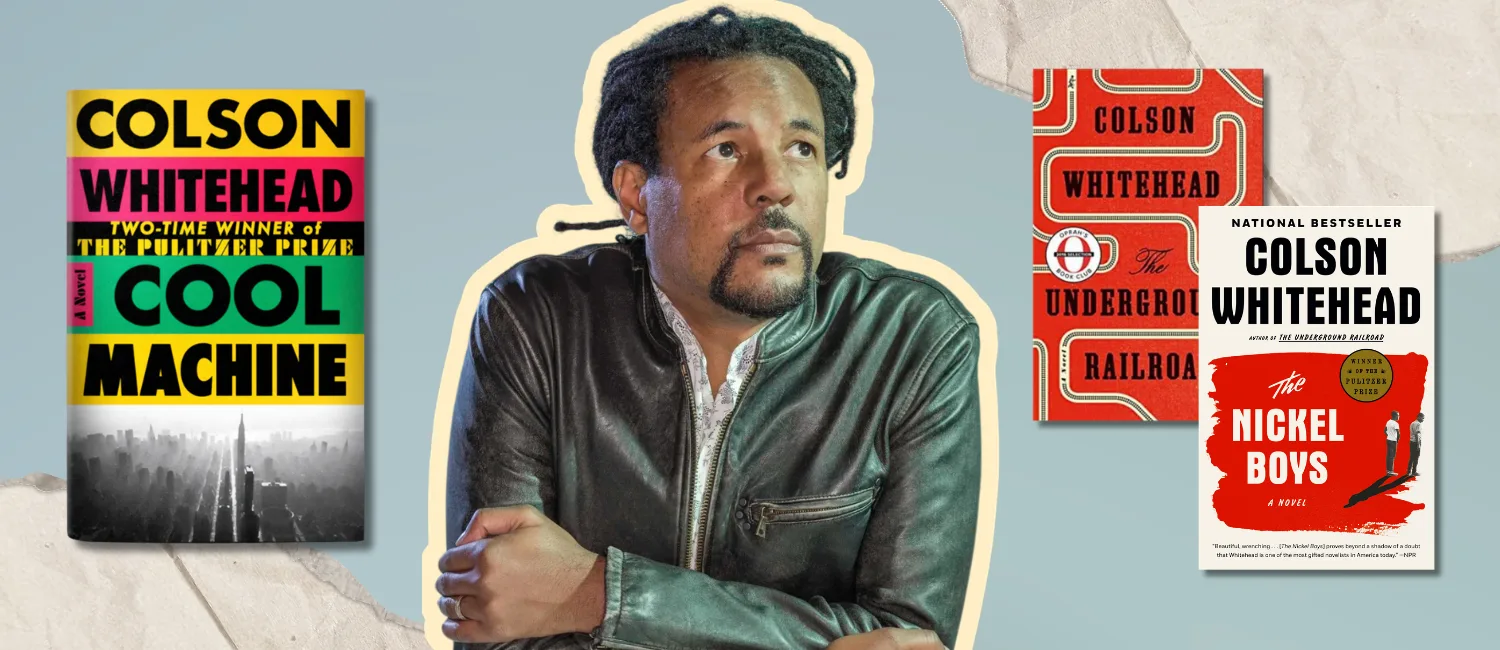
Ahead of A Conversation with Colson Whitehead on October 1, we invited Desmond Hall, author of Better Must Come and graduate of GrubStreet’s Novel Incubator, to explore one of the qualities that makes Whitehead’s fiction so compelling: layering.
When I think of Colson Whitehead’s work, there’s a plentitude to learn from, as one would expect from a man who’s been awarded so many trophies that he could use them as door stoppers for every room in Gracie Mansion. And this includes the Pulitzer Prize—a distinction he’s achieved in 2017 and 2020—only the fourth American writer to win the award twice.
By reading and learning from the many facets of his intricate storytelling, I’m struck dumb by the level of his layering. In workshops, at writing schools and studying at the feet of various literary sages one comes to hear that you must create depth through layering—the action, the story, the characterization, the dialogue— events added to context yielding insight but not as one might have expected it—one piece complimenting another—viewpoints alternating—each layer changing how one reads the others.
In his latest novel, Cool Machine:
The comic relief of a man’s love for a coffee table is also emblematic of his station in life, his profession and his deepest feelings about capital L love.
A mayor of New York asks “How am I doing?” to glad-hand, and many pages later at a key turning point another mayor utters the same catchphrase while lending a hand at a crucial moment.
In this sentence he writes about Graffiti on subway trains of yore using, metaphor, simile, hyperbole, and allusion.
“…a spiteful jumble of letters and numbers, as if all the antipathies and mean ideas of those inside the cars had been transcribed into a primitive language on the outside.”
In this excerpt he uses personification to shine a literary street light on the city that never sleeps, while also employing cultural insight to outline historical and geographical factors that shape deeper meanings in the manuscript. In addition, he uses foreshadowing to help usher the reader into the criminal underworld of Gotham.
“The city that year was true to its personality, as malformed across the centuries—a monstrous entity powered by innate miseries, operated by brute will, and held together by pluck, fury, and rebar. It had been flat broke, and now clambered from the crater of debt one mucky handhold at a time. Crime in its ingenuity devised new permutations daily, making every citizen a victim or a witness. New arrivals poured in hourly, as if there were room, multiplying the local varieties of sadness and perseverance, and outnumbering those who had scurried to the suburbs or fled their last humiliation.”
In his Pulitzer Prize winning, Underground Railroad:
The work abounds with seemingly normal characterizations that reveal themselves many pages later to be set ups for moving and tense payoffs that turns the tale on its head.
Here is an excerpt where he does several things in the span of one remarkable sentence—he employs a poetic/literary take on slavery—he uses psychology to describe how PTSD is a part of daily life for a slave—and then makes a sociological observation on how the institution of slavery serves to unite and as well as divide the subjugated individuals.
“…the travesties so routine and familiar that they were a kind of weather, and the ones so imaginative in their monstrousness that the mind refused to accommodate them. Sometimes such an experience bound one person to another; just as often the shame of one’s powerlessness made all witnesses into enemies.”
In the Pulitzer Prize winning, Nickel Boys:
A death, tragic in every way, near the end of a gut-wrenching tale of pain and abuse undergoes metamorphosis via his deft hand on the cocoon of the page and emerges as life anew in a complexified equilibrium.
Thematically, he renders innocence sheltered from the neighborhood trouble makers, that becomes innocence gaining gainful employment, that becomes innocence taking a step towards college, that becomes innocence taking the wrong car ride, that becomes innocence found guilty by those who have little regard for innocence.
From this breathtaking excerpt the power and depth of his prose deliver characterization through the protagonist’s musical exploration.
“Elwood received the best gift of his life on Christmas Day 1962, even if the ideas it put in his head were his undoing. Martin Luther King, At Zion Hill was the only album he owned and it never left the turntable. His grandmother Hattie had a few gospel records, which she only played when the world discovered a new mean way to work on her, and Elwood wasn’t allowed to listen to the Motown groups or popular songs like that on account of their licentious nature. The rest of his presents that year were clothes – a new red sweater, socks – and he certainly wore those out, but nothing endured such a good and constant use as the record. Every scratch and pop it gathered over the months was a mark of his enlightenment, tracking each time he entered into a new understanding of the Reverend’s words. The crackle of truth.”
From the sentence level to the street level, and onto the deepest level of the heart we dare show to none. Layered, oh so layered.
Keep reading in this series
What’s the MDQ? Focusing on the Main Dramatic Question in the Essay Incubator